

How VIA Outlets Modernised Its Data Platform, Without Breaking the Business
Ana Rita das Neves
- Client VIA OUTLETS
- Role Business Intelligence
- Year 2026
How VIA Outlets Modernised Its Data Platform, Without Breaking the Business
A partnership built on shared risk, a robust data architecture and a commitment to get it right.
0. The Strategy Behind the Selection
When Nadir Turkman joined VIA Outlets in October 2023 as Head of Data & Analytics, his mandate was clear: build a data strategy capable of supporting the company’s long-term ambitions. An internal assessment quickly revealed that the challenge was not just technical — it was structural. The existing data architecture had the right tools in place, but had never been properly configured to match the reality of the business. It had passed through multiple contractors without a consistent vision, leaving behind a fragmented, unscalable foundation that was impossible to evolve with confidence.
The first strategic decision was to find the right partner. VIA Outlets is not a technology company, and does not pretend to be: outsourcing technical capability had always been part of the plan. But the existing arrangement was not delivering. A formal RFP process was needed.
What made this selection process stand out was its intentionality. Rather than defaulting to the biggest names or the most polished pitch decks, VIA Outlets built a requirements document that went far beyond the technical. It articulated the company’s vision, culture, timeline, and long-term ambitions for data. The process was designed to find not just a vendor, but a genuine strategic fit.
The match with DevScope came through that clarity. In their first meeting, Nadir outlined what VIA Outlets needed most: not custom-built code that would create dependency and inconsistency every time a contractor changed, but a robust, scalable framework that could standardise how data flows across all centres. DevScope’s response — that they had built exactly that — was the moment the partnership took shape.
The second dimension of fit was cultural. VIA Outlets wanted a partner that would work alongside their team, not just deliver to it. A true extended team: where, from the outside, it would be impossible to tell where one organisation ended and the other began. Shared ownership, shared risk, and shared accountability for outcomes.
Nadir Turkman, Head of Data & Analytics, VIA Outlets
1. The Partnership
This project was not a standard technology delivery. It was a genuine partnership, built around shared accountability, a demanding timeline, and a shared commitment to do it right rather than just get it done.
VIA Outlets entered the engagement knowing the stakes: sensitive financial data tied to company targets, a tight timeline with go-live set for July, and zero tolerance for inaccuracy in reported values. What separated success from failure was alignment on what mattered most, and a willingness from both sides to make harder short-term choices in service of a better long-term outcome.
The rigorous approach to validation, the decision to refactor rather than replicate, and the investment in a scalable architecture that would serve VIA Outlets long beyond the project: these were the hallmarks of a genuine partnership, not just a delivery contract.
Nadir Turkman, Head of Data & Analytics, VIA Outlets
2. The Experience with DevScope
VIA Outlets describes the collaboration with DevScope as a true partnership, particularly in navigating a project with this level of technical and organisational risk. The confidence VIA Outlets has in its data today is inseparable from the confidence it has in the platform DevScope built, and in the team that built it.
Key attributes of the collaboration:
- Shared ownership of outcomes, not just deliverables. Both teams committed to the same goal.
- Deep technical expertise in data engineering, ETL architecture, migration and process automation, including automated report delivery.
- Transparent communication throughout a complex, high-stakes timeline.
- A commitment to knowledge transfer that left VIA Outlets genuinely empowered post go-live, able to own, evolve and extend its data platform independently.
- A working model built around controlled risk and BAU protection, ensuring the business was never exposed during the transition.
Rather than creating dependency, DevScope’s approach expanded the scope of what VIA Outlets could do with data, enabling more ambitious analytics initiatives going forward and laying the foundation for continued growth.
3. Context & Initial Challenge
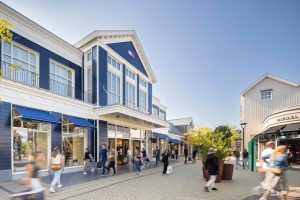
VIA Outlets, the leading owner-operator of the world’s most sustainable fashion outlet centres, has a pan-European portfolio that includes destinations such as Batavia Stad Fashion Outlet (Netherlands), Landquart Fashion Outlet (Switzerland), Sevilla Fashion Outlet (Spain) and Vila do Conde Porto Fashion Outlet (Portugal), among others.
The business model is built on a two-pronged growth strategy. On one hand, it drives organic growth by applying the 3R approach (remodelling; remarketing and remerchandising) across existing centres. On the other hand, it pursues inorganic growth through the acquisition of new centres. At this scale, data is the operating system of the business: sales performance by brand and centre, footfall, financial KPIs and team targets underpin every leasing decision, remodelling investment and stakeholder report.
As the portfolio expanded, the data infrastructure had not kept pace. VIA Outlets was operating on a legacy platform that created increasing constraints:
- Onboarding friction: Each new centre brought heterogeneous source systems, APIs, SQL Server, and others, making integration time-consuming and hard to standardise.
- Scalability limits: Long-term analytics governance and platform evolution became harder as the portfolio grew.
- Migration risk: Migrating to a new platform without disrupting existing reports or altering validated historical values required exhaustive testing and a carefully controlled process.
- Reporting burden: Teams spent significant time reconciling data instead of acting on it.
- Future-proof limitations: The legacy architecture was not designed to support modern AI and advanced analytics use cases — such as predictive models and machine learning pipelines — leaving VIA Outlets ill-equipped to evolve toward next-generation data capabilities.
VIA Outlets recognised that a modern, centralised and scalable data foundation was not optional. It was a strategic necessity.
4. The Solution
VIA Outlets partnered with DevScope to migrate its data platform to a modern, cloud-native architecture. The setup of the ETL Framework and data lake, combined with the refactor of the business model (CIP), began in January and went live in July, with Retail data as the first domain to go live on the new architecture. The approach was defined by two principles: technical rigour and genuine partnership.
Built on a Proven Architecture: The DevScope ETL Framework
At the heart of the solution is DevScope’s ETL Framework, a scalable, robust data platform that enables VIA Outlets to integrate any source system (APIs, SQL Server, flat files and beyond) into a single, governed data lake. This architecture underpins everything: from consistent KPI definitions to governed Power BI semantic models, it is the foundation on which VIA Outlets’ entire analytics ecosystem now runs.
Key elements of the solution:
- Divided technical ownership — platform migration and model refactor: DevScope took ownership of Data Engineering — the ETL framework, pipeline architecture and deployment. VIA Outlets retained ownership of data architecture and modelling. Rather than a simple lift-and-shift, both teams worked together to refactor the existing data model, eliminating technical debt while preserving the validated business logic that teams already trusted. The goal was not to reinvent, it was to improve, migrate, and ensure nothing was lost in the process.
- BAU continuity throughout: A dedicated Business-as-Usual team ensured that reporting and operations continued without disruption throughout the migration. The impact of the new platform was felt immediately and positively, which, as the client noted, rarely happens in this kind of transformation.
- Multi-environment delivery model: DEV / UAT / PRD environment segregation protected production stability throughout, supporting controlled and confident releases.
- Advanced data foundations (CDC + SCD Type 2): Implemented from the outset as a core requirement, these data engineering patterns ensured historical accuracy, traceability and consistent KPI definitions, critical for financial and sales metrics directly tied to team objectives.
- Governance and automation via CI/CD: CI/CD pipelines, including automated Power BI deployments, reinforced repeatability, governance and reliability across the platform.
- Governed Power BI layer: Semantic models consolidated Retail and Marketing into a single governed model, reducing fragmentation and delivering reusable report templates that accelerated insight delivery.
- Internal team enablement: VIA Outlets’ analytics capability was built alongside the technical delivery, ensuring full ownership post go-live, without permanent external dependency.
4a. A New Model of Collaboration
What made this engagement different was not just what was delivered, but how. From the outset, the two teams — VIA Outlets and DevScope — operated as a single extended unit, not in the traditional “Request + Execution” mode, but as genuine co-executors of a shared roadmap. Responsibilities were divided by competence, not by boundaries.
This model has continued beyond the initial delivery, governing how both teams work together on the ongoing evolution of the platform:
Strategy & Governance
- Work organised in Azure DevOps, with backlogs segregated by projects and initiatives, ensuring full transparency and traceability.
- Dedicated team with clearly defined roles and responsibilities on both sides.
- High-level planning sessions, with deeper dives whenever a specific initiative demands it.
- Daily stand-ups and regular touchpoints for progress monitoring and continuous alignment.
Partnership Management
- Weekly governance meetings focused on delivery, team allocation, risk identification and escalation.
- Risk and alert tracking with mitigation plans defined proactively, not reactively.
Continuous Collaboration & Strategic Alignment
- In-person workshops every two months, focused on the most strategically relevant initiative at each point in time.
- Monthly progress reports shared across stakeholders.
- Planned absence management and on-call coverage including bank holidays, ensuring operational continuity.
Continuous Improvement & Transparency
- Ongoing process improvement — from deployment planning to platform governance — driven by both teams.
- DevOps-led working model with centralised evidence, documentation and organisation accessible to all stakeholders.
- Full information transparency across teams, eliminating the knowledge silos that had affected the previous setup.

5. The Impact
Tangible Results
- A trusted data foundation: the refactored model, built on DevScope’s ETL Framework, gave VIA Outlets a single source of truth across all centres, enabling teams to act on data with confidence.
- Seamless BAU continuity throughout the migration. Historical values were preserved, existing reports kept running, and the transition was invisible to end users.
- A scalable, cloud-native architecture built to absorb new centres, new source systems and new metrics without starting from scratch.
- Stronger cross-functional analytics across Retail, Marketing and Finance, aligned through a governed semantic model.
- 1,000+ hours saved per year through automation and platform efficiency gains.
A Note on Delivery
The project was delivered within the agreed timeline, with go-live reached in July, with highly sensitive financial data in scope and exhaustive validation requirements from the start. This reflects the quality of the joint working model: shared accountability, controlled risk and a commitment from both teams to get it right, not just get it done.
Operational Transformation
One of the most significant forward-looking indicators of the platform’s value is its readiness to support the onboarding of new outlet centres. Previously, each new acquisition would have meant a bespoke integration effort — a time-consuming and resource-intensive process for every new source system encountered.
With DevScope’s ETL Framework now in place, any new centre operating on standard systems can be brought into the platform rapidly and reliably, with its data flowing into the same governed structure from day one. Where source systems differ, the framework significantly reduces the integration effort, though data analysis, mapping and modelling remain part of any new system integration.
Nadir Turkman, Head of Data & Analytics, VIA Outlets
Data Culture in Practice
The success of the project created internal momentum: other teams and departments began requesting similar BI capabilities, marking a shift from a project outcome to a company-wide data culture.
Key Metrics
The following metrics reflect the state of the data platform and analytics ecosystem following delivery:
| Metric | Result |
|---|---|
| Hours saved per year | 1,000+ |
| ETL processing time | ~75% reduction |
| Legacy platform cost / operational friction | ~50% reduction |
| Reports redesigned | 31 |
| Data domains unified | 12 |
| Report views (platform) | 34,600 |
| Unique visitors (platform) | 151 |
| Reports exported | 1,347 |

Conclusion
By partnering with DevScope, VIA Outlets transformed a complex, high-stakes data migration into the foundation for long-term analytical maturity, delivering a trusted, scalable data platform and a genuine data culture across a pan-European premium retail operation.
What started as a platform modernisation challenge became a competitive advantage: a future-proof architecture ready to onboard new centres, trustworthy reporting at every level, and a data team empowered to keep pushing the boundaries of what the platform can do.
